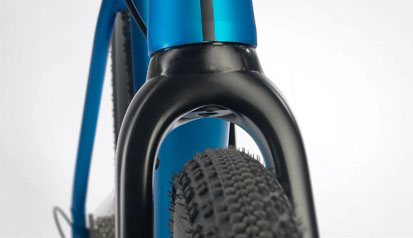
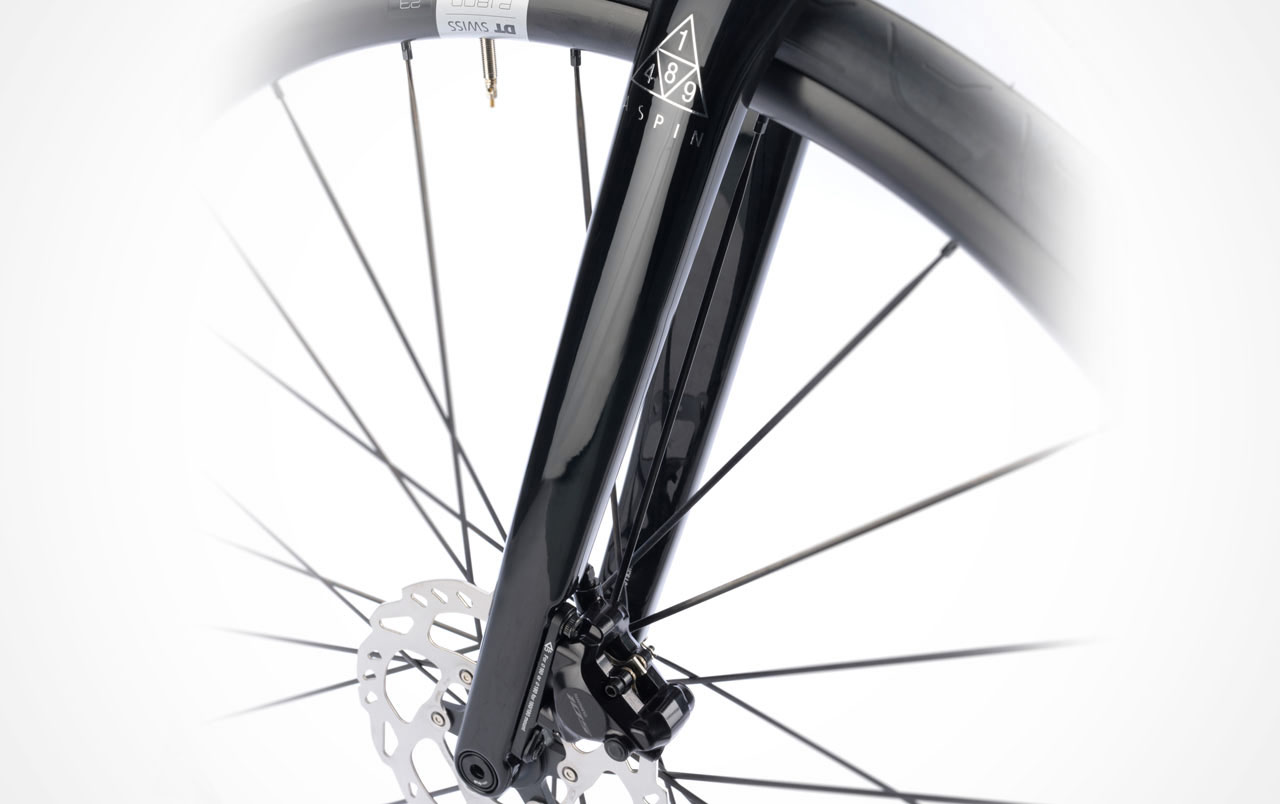
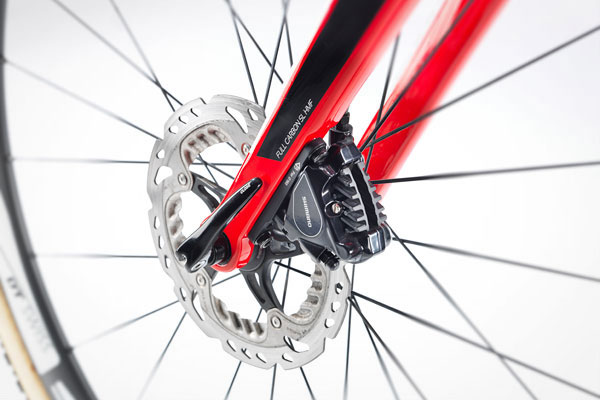
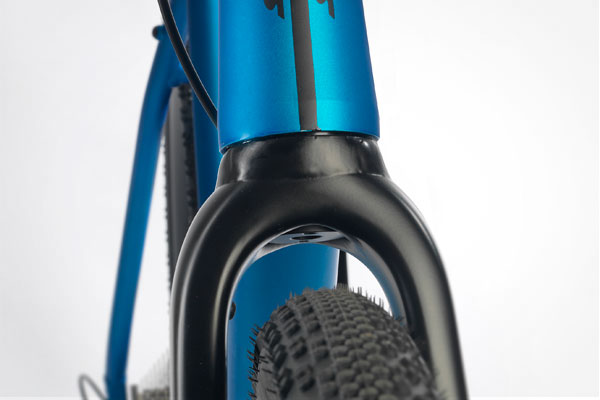
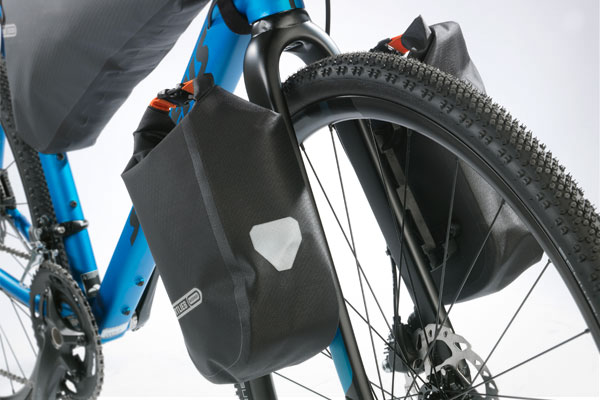
Horquilla íntegra de carbono
 This page is from a former STEVENS Bikes model year (2025).
These pages are meant as a service in case you have questions about equipment and geometry of older STEVENS bikes.
You can pick other model years at Service – Product Years.
This page is from a former STEVENS Bikes model year (2025).
These pages are meant as a service in case you have questions about equipment and geometry of older STEVENS bikes.
You can pick other model years at Service – Product Years.

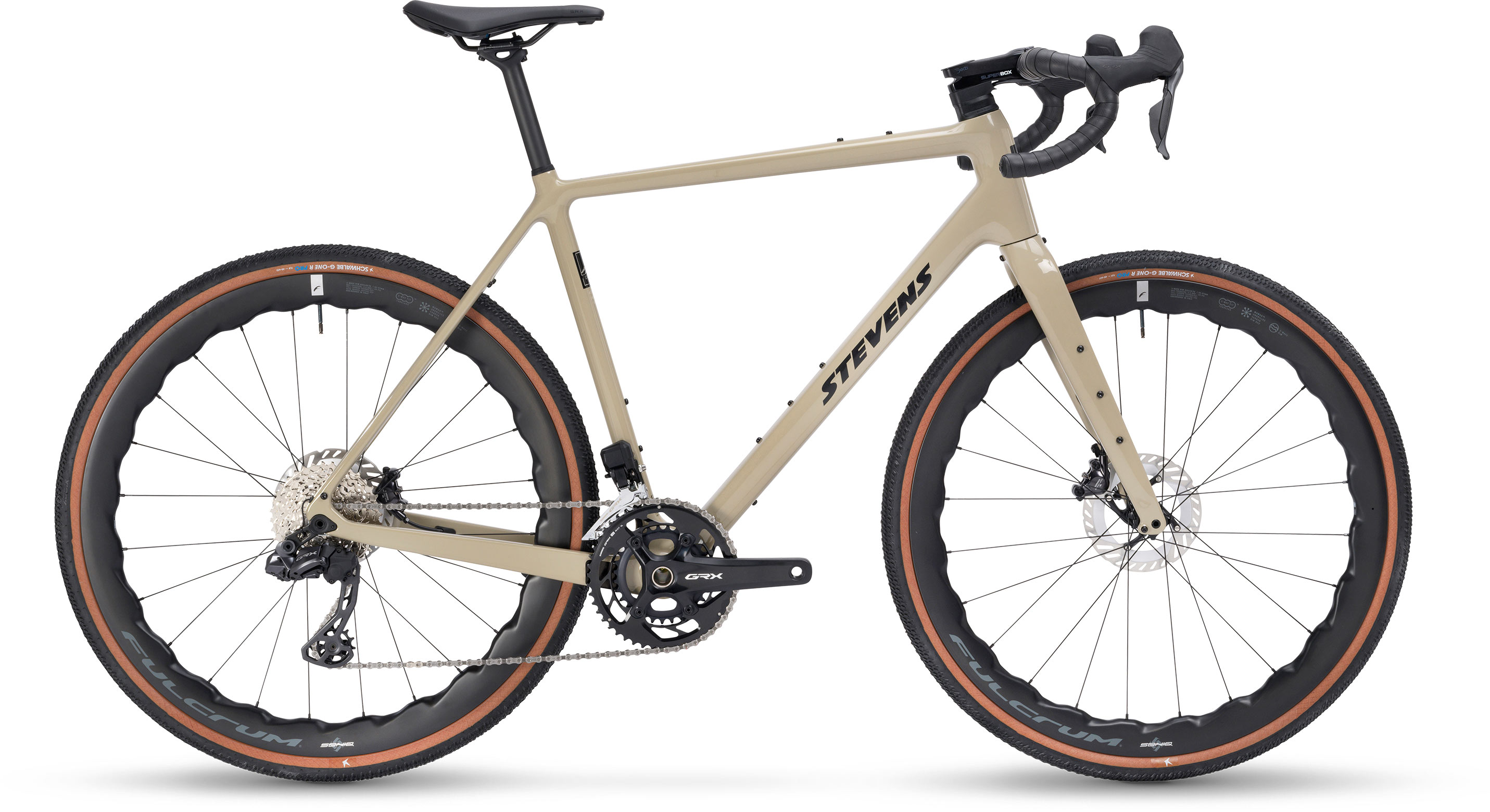
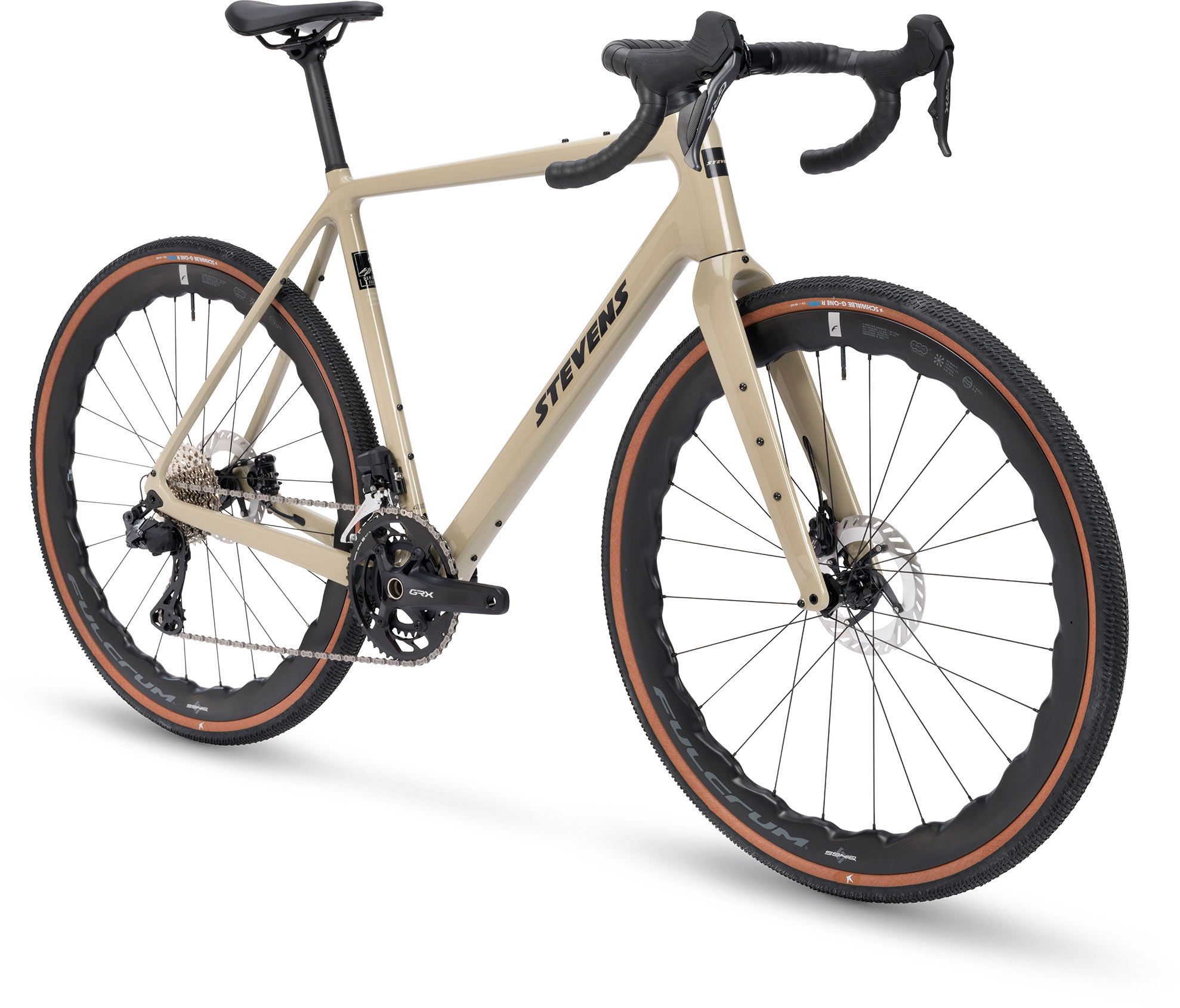
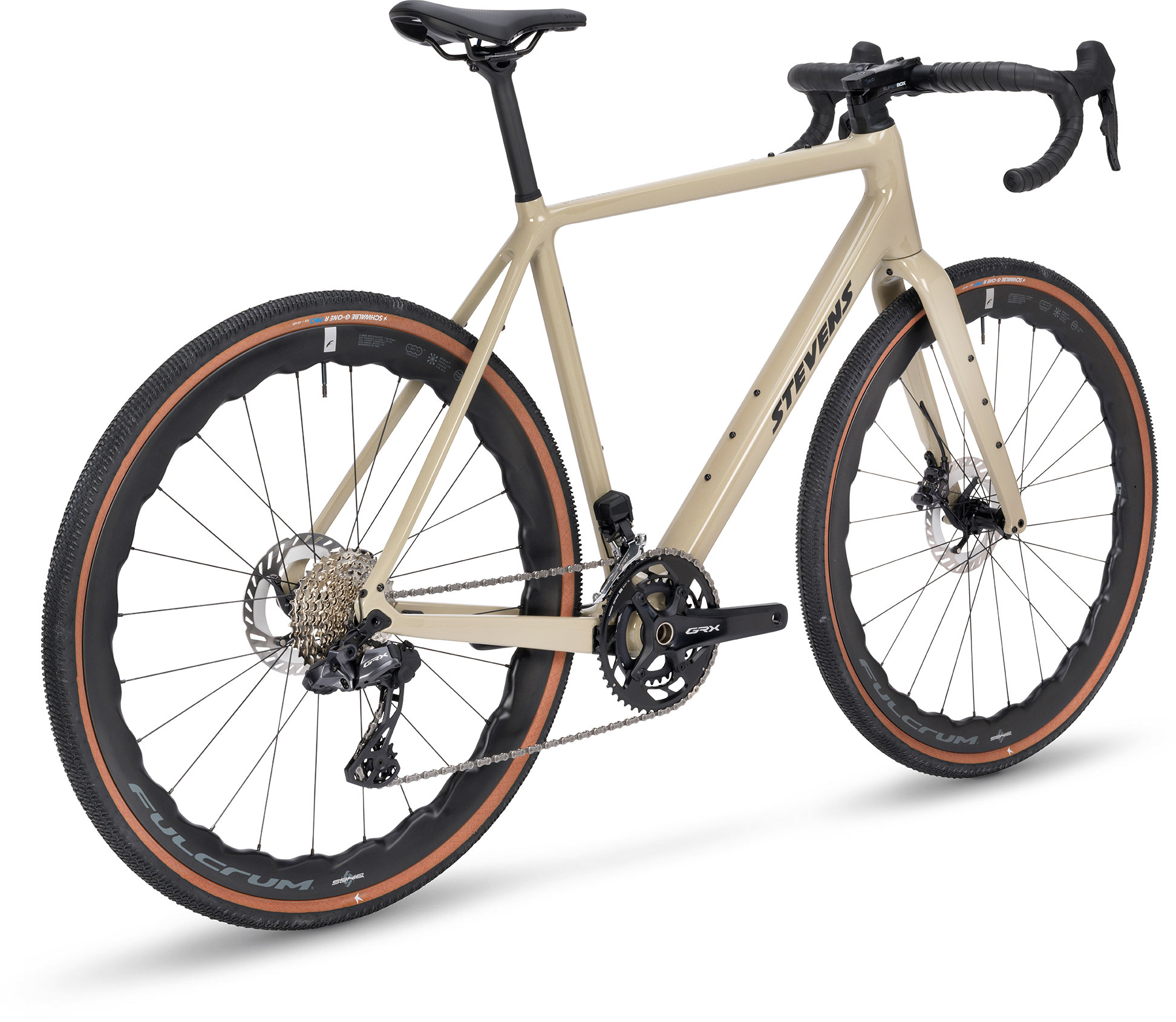
| Tubería del cuadro | Carbon SL Fiber |
|---|---|
| Tallas | 48, 51, 54, 56, 58, 61 cm |
| Color | Light Khaki |
It is known for being sporty, but still places its focus on adventure and touring.
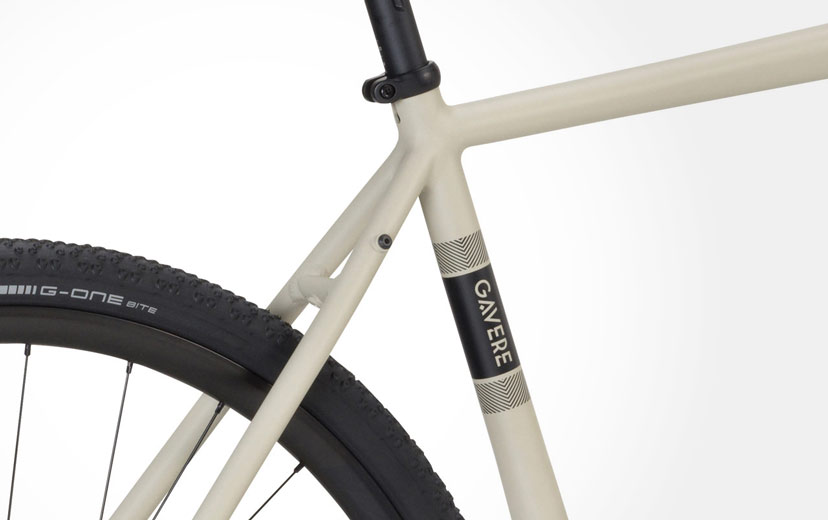
With its full carbon frame, the Camino has won numerous tests and impressed editors with its excellent weight, great handling, comfortable geometry, and practical features. In addition, there is a choice of six sensibly graded frame heights.
Shimano's GRX 825 Di2 wireless shifting system is considered innovative and reliable: fast and comfortable gear changes are a delight on every tour.
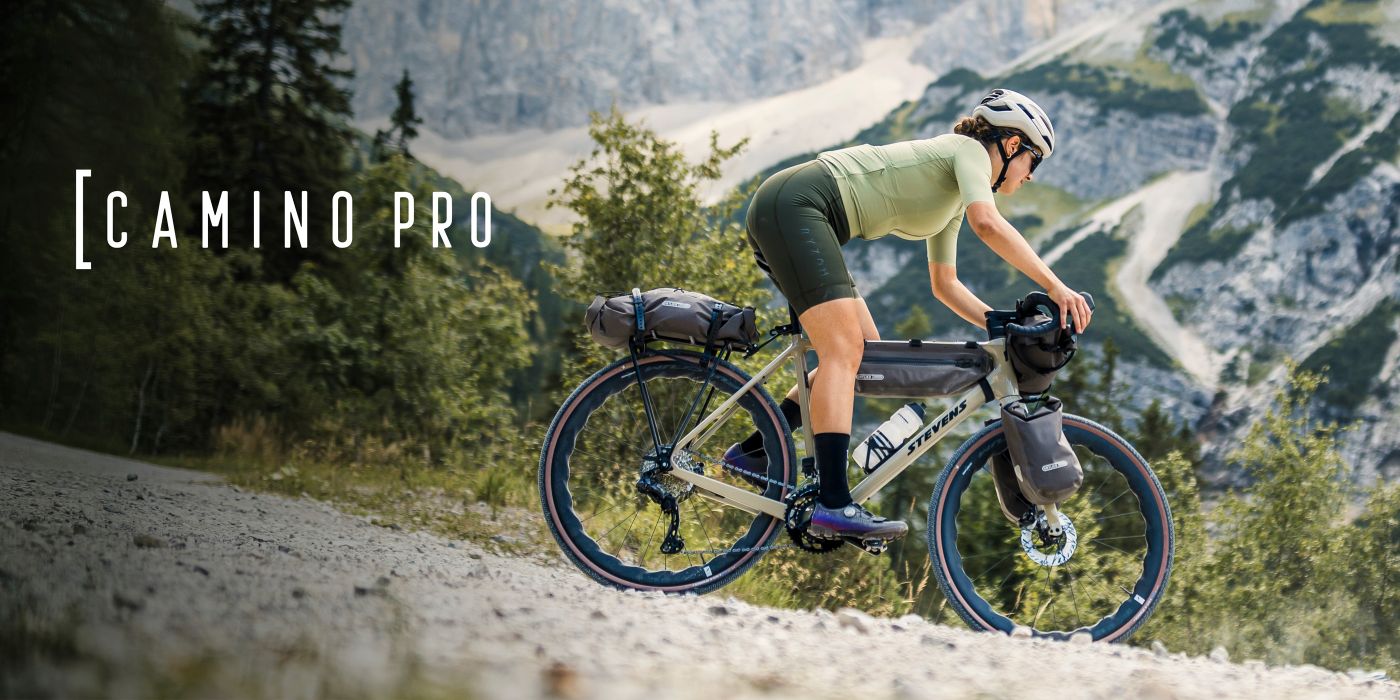
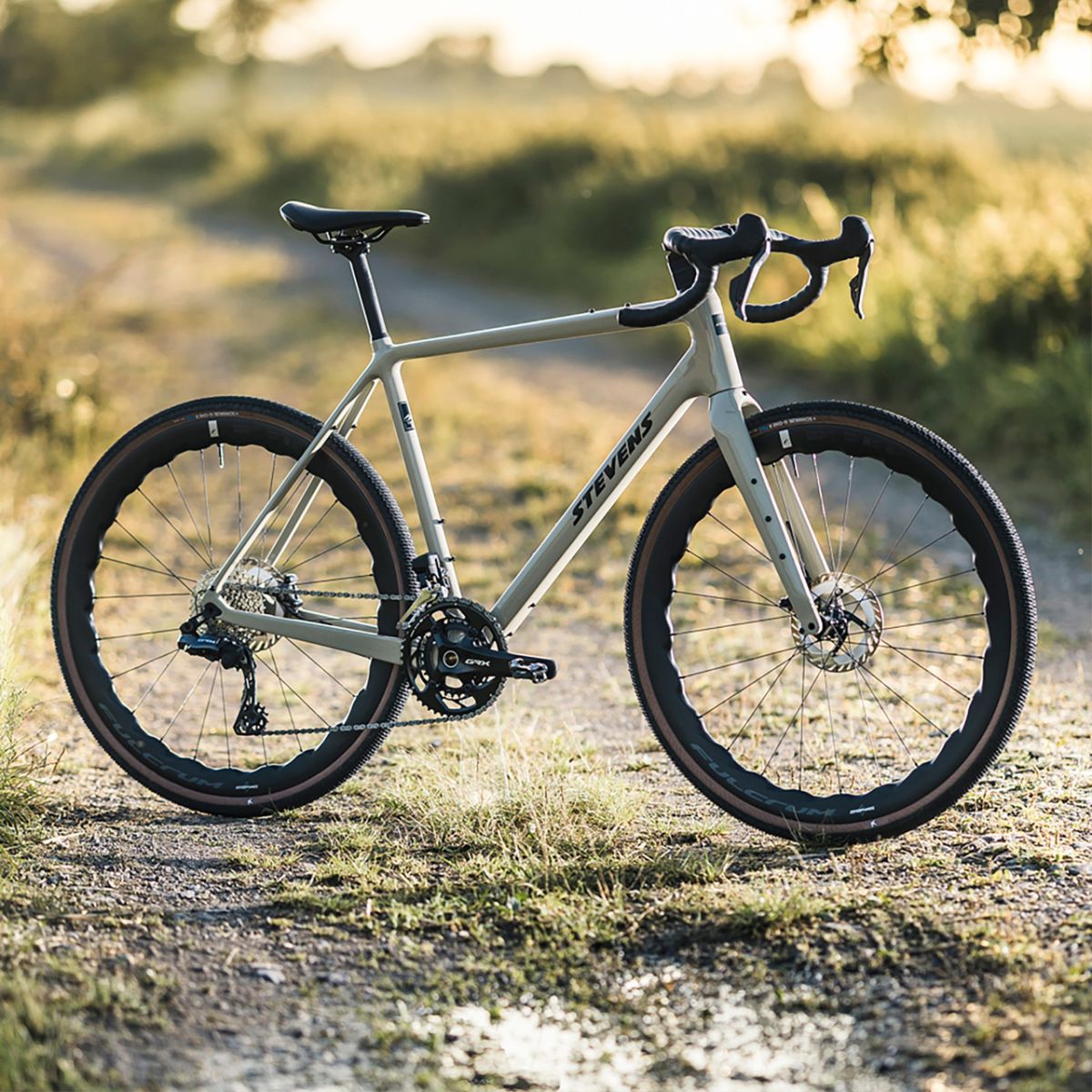
The Camino Pro Di2 is the top model of the STEVENS Carbon Gravel series. Unlike the three RS models with their “race” character, it emphasizes the adventure and touring aspect. The series is available in six different frame sizes, allowing riders to perfectly adjust the bike to their individual needs.
The STEVENS full-carbon frame has earned multiple test victories, impressing editors with its excellent weight, outstanding ride quality, comfortable geometry, and well-thought-out equipment. On the new Di2, Shimano’s wireless electronic shifting system provides reliable, fast, and comfortable gear changes.
Alongside the Pro Di2 are the Camino Pro with Shimano’s GRX 820 2x12 and the Camino with the GRX 820/610 groupset with 2x12 drivetrain. Both cover the mid-price range, while the Pro Di2 rounds off the collection at the top.
Las imágenes pueden variar. Equipamiento sujeto a cambios.
 Tubería del cuadro
 Horquilla
 Dirección
 Freno delantero
Freno trasero
Freno delantero
Freno trasero
 Disco de freno
 Juego de bielas
 Desviador delantero
 Desviador trasero
 Cadena
 Cassette
 Juego de ruedas
 Neumáticos
 Manillar
 Potencia
 Sillín
 Tija
Tija
 Maneta de cambios y frenos izquierda
 Campana
 Peso total permitido
 Color(es)
 Tallas
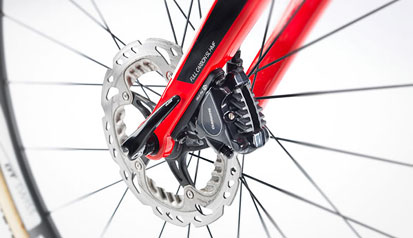
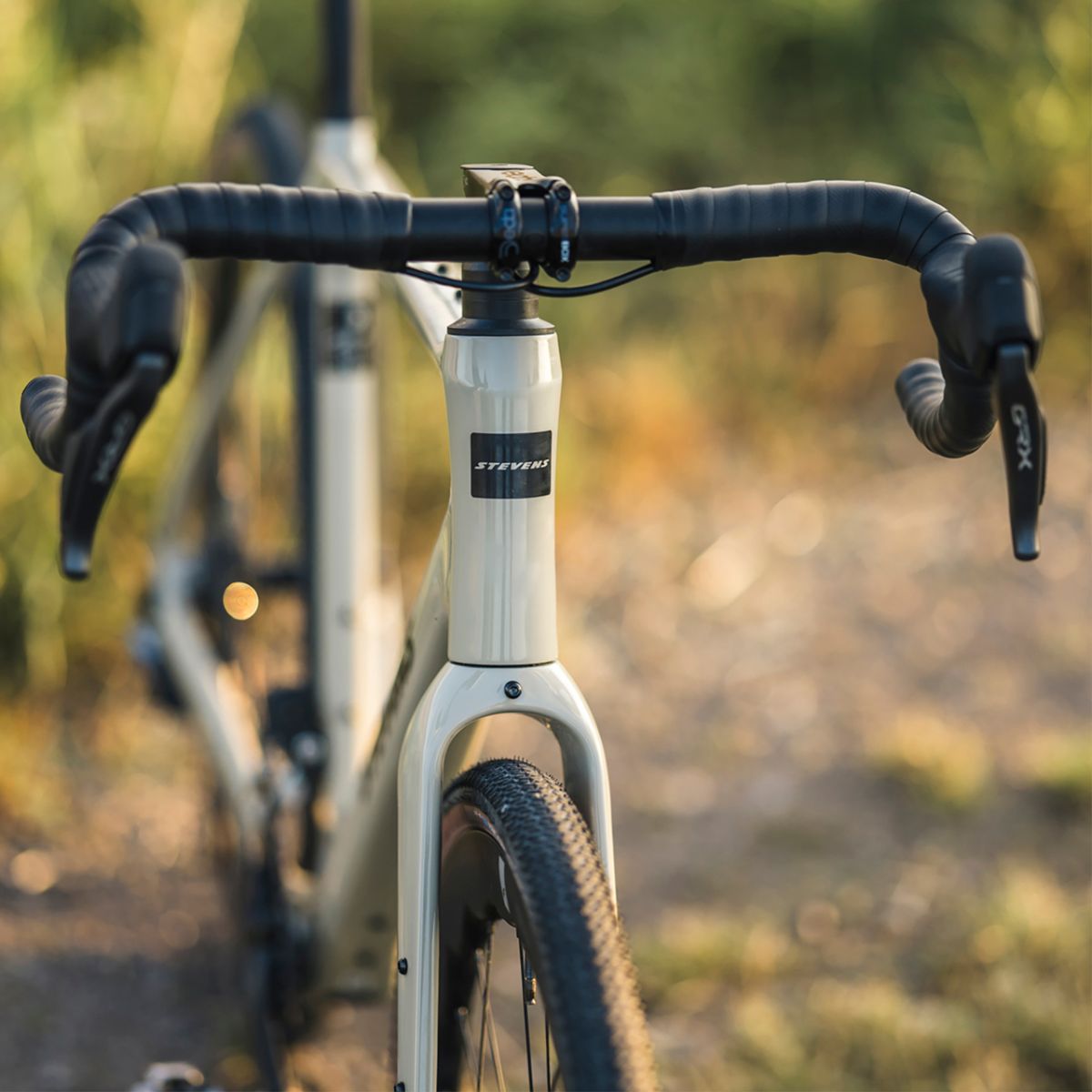
On modern performance bikes, brake hoses and shifting cables disappear inside the fork, frame, and headset. The clean look reduces dirt buildup and minimizes maintenance. With Shimano’s high-end wireless shifting systems, things get even more elegant and compact. The batteries for the electronic derailleurs need charging – everything else is managed via software and app.
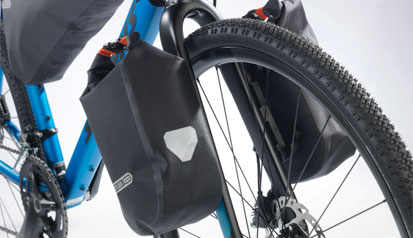
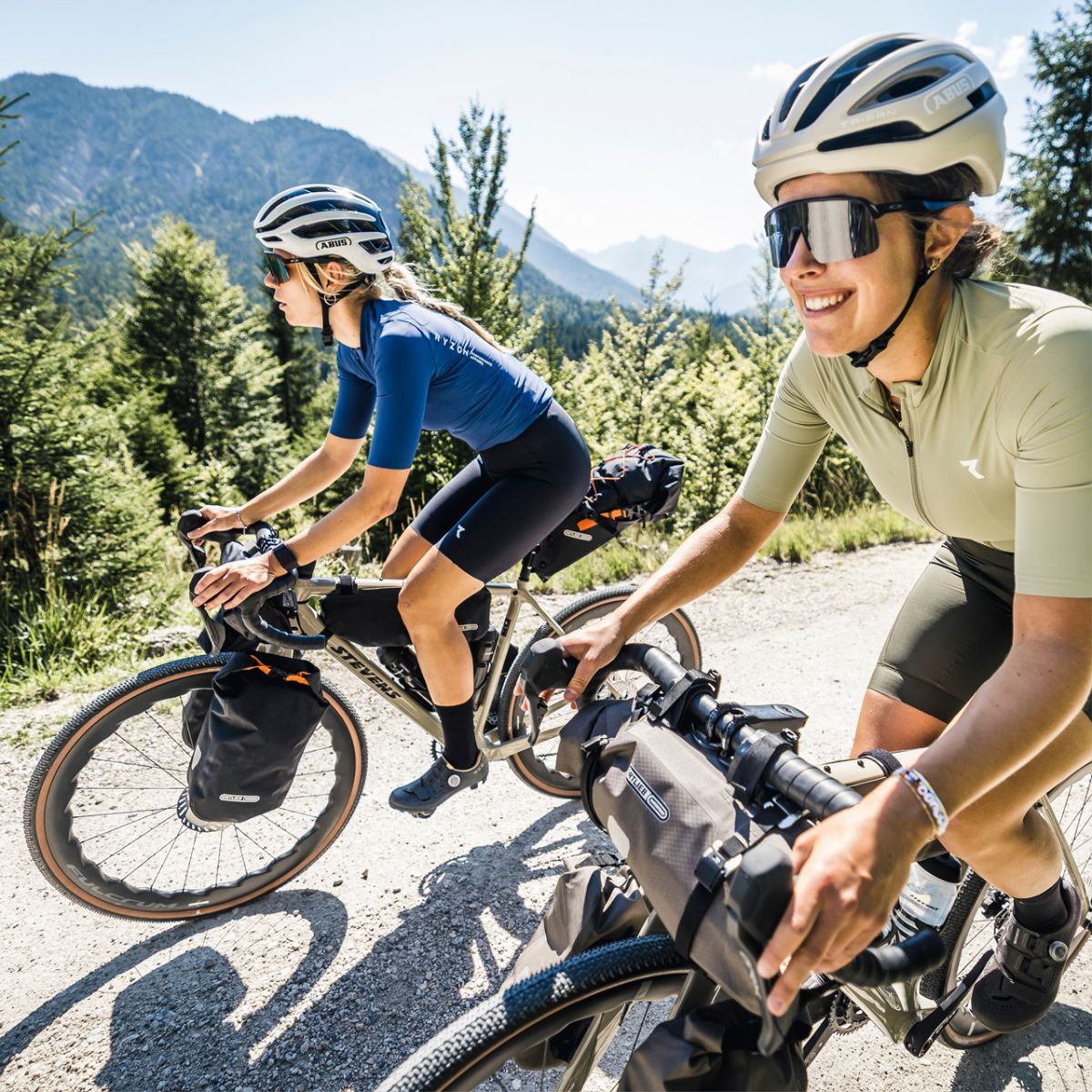
Bikepacking, as a modern and minimalist form of travel, relies on individually assembled bag sets that can be mounted at numerous dedicated attachment points on the Camino Pro’s frame and fork. This allows the loadout to be adapted to the destination and the length of the tour.
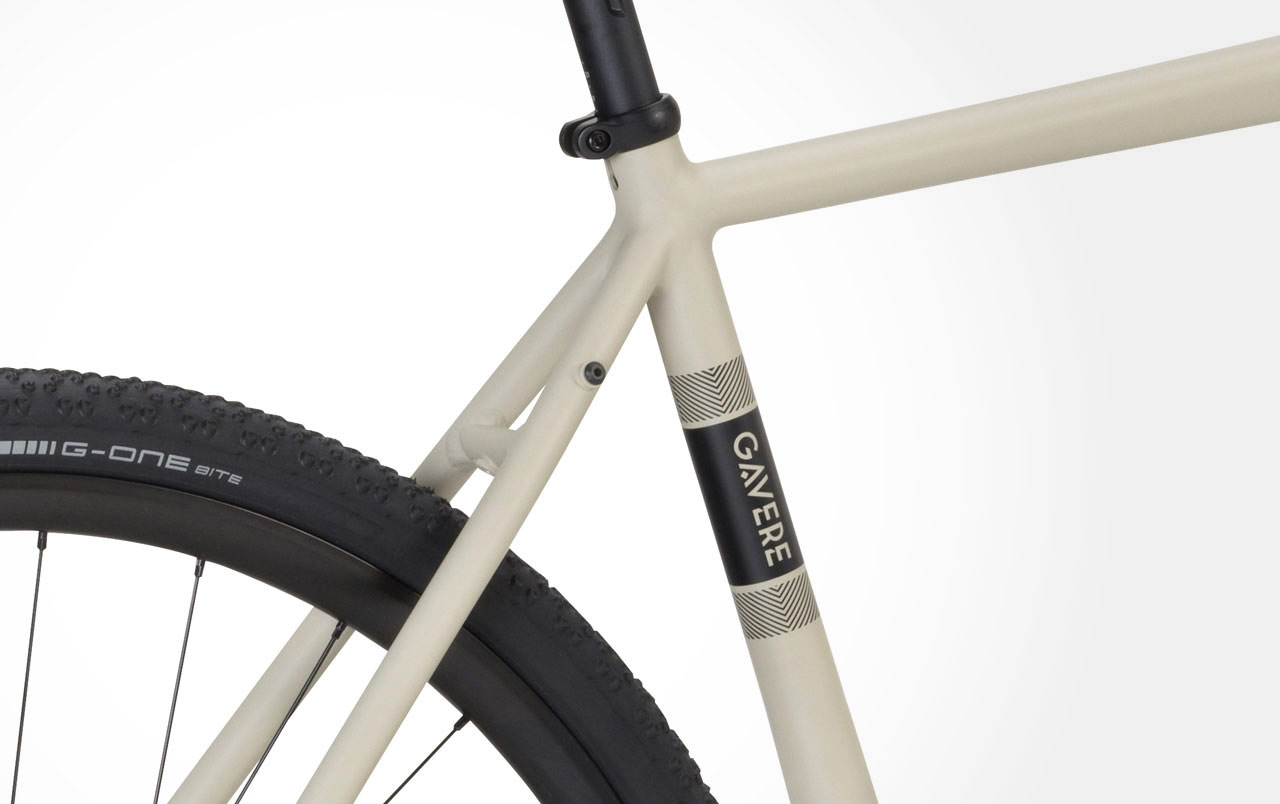
Tires play a key role as demands continue to rise. They are designed to roll efficiently, offer durability, puncture protection, and low weight, while above all contributing to excellent traction and crucial comfort. The comfort provided by wider tires is considered one of the main reasons for the success of gravel bikes. Both the STEVENS Camino and Camino Pro models allow the use of 45 mm comfort tires. On the Pro Di2, the slimmer 40 mm version of the Schwalbe G-One R Pro Evolution comes as standard.
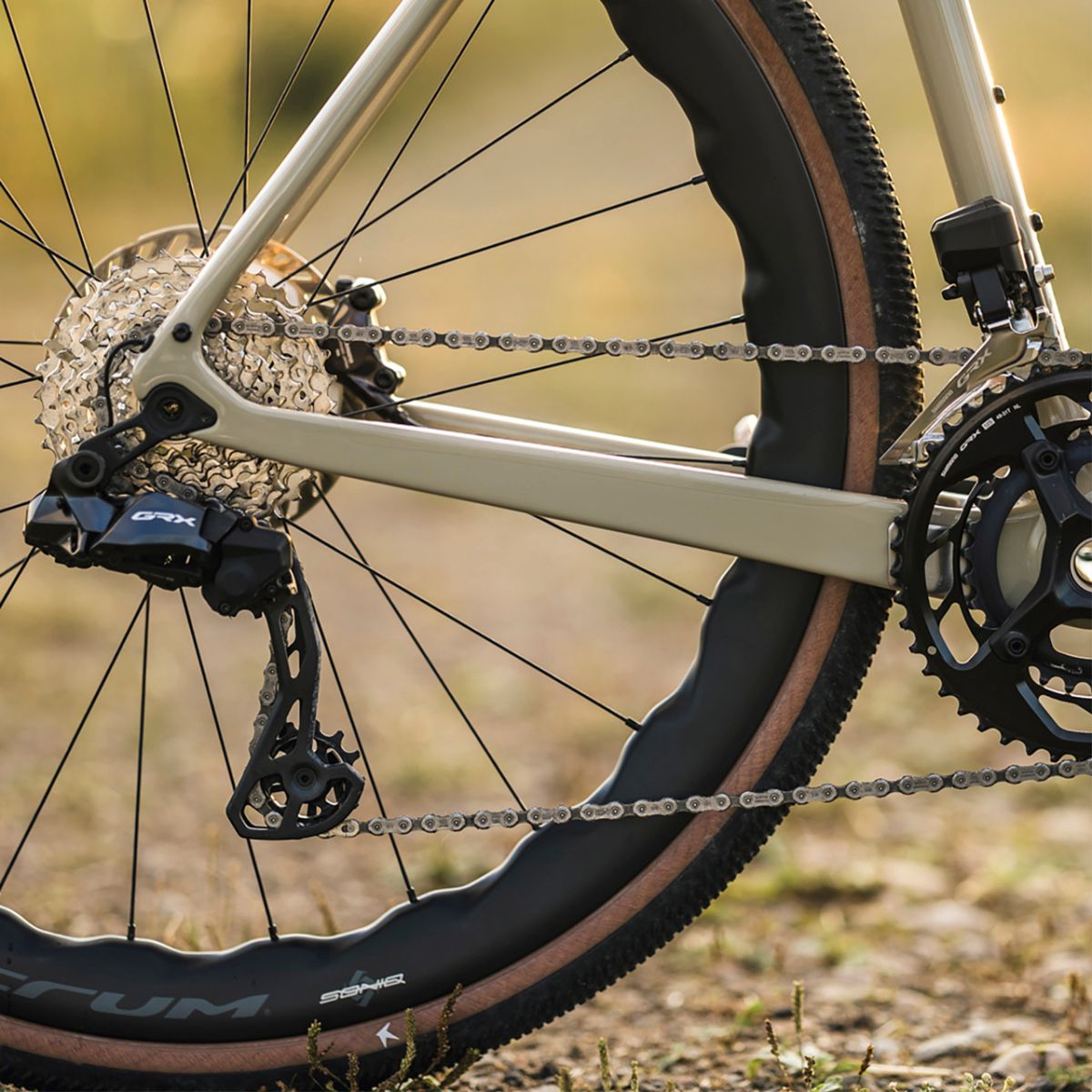
Shimano’s GRX Di2 wireless shifting also proves its worth off-road: no tangled or stiff cables, minimal maintenance, and gear commands that reach front and rear derailleurs quickly and reliably.
The 2x12 drivetrain offers a wide gear range of 507% along with finely graduated steps between gears. This ensures riders always have the optimal cadence available.
An innovative technology on the rear derailleur is SHADOW RD+. An optional chain stabilizer tightens the chain and prevents chain slap or chain drop when riding in rough terrain.
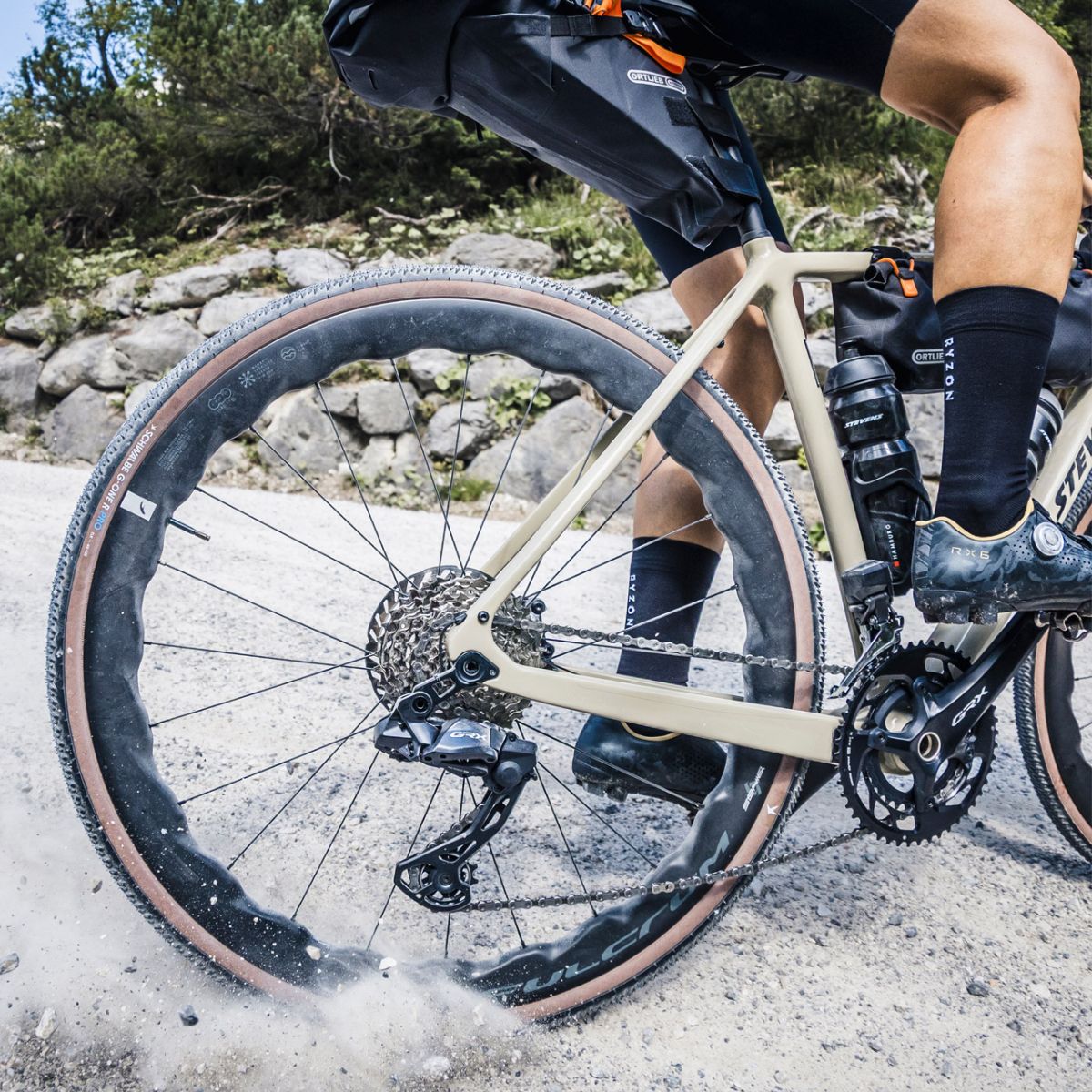
Soniq – an innovative, lightweight yet robust gravel wheelset from Italian premium manufacturer Fulcrum. The Camino Pro Di2’s carbon wheelset is tubeless- as well as tube-compatible and weighs around 1,590 grams. The matte-black finish gives it a refined look, while the modern wave-shaped rim profile is designed according to aerodynamic principles.
The rim varies in height from 42 to 47 mm and measures 28 mm wide (25 mm internal), allowing the use of all gravel tires. A technical highlight is the hub technology with low aluminum flanges and adjustable sealed high-quality bearings. The 12 mm thru-axles (100 and 142 mm) and 24 stainless steel spokes each provide the wheel with optimal stiffness values.
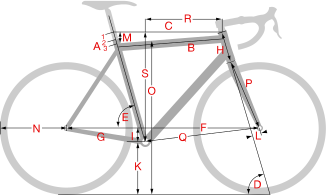
El asesoramiento en línea sobre tallas no sustituye el asesoramiento de un minorista especializado. Sirve como orientación inicial y puede diferir de las preferencias personales. Una prueba de conducción ofrece la mejor comparación.
| Tamaño de cuadro (cm) | 48 | 51 | 54 | 56 | 58 | 61 | Toma de mediciones | |
|---|---|---|---|---|---|---|---|---|
| Longitud del tubo del sillín | A1 | 554 | 578 | 603 | 623 | 645 | 665 | nominal |
| Longitud del tubo del sillín | A2 | 450 | 480 | 510 | 540 | 570 | 600 | centro del eje de pedalier hasta borde superior del tubo del sillín |
| Longitud del tubo del sillín | A3 | 434 | 463 | 493 | 523 | 554 | 581 | centro del eje de pedalier hasta borde superior del tubo superior |
| Longitud del tubo superior | B | 502 | 531 | 556 | 572 | 588 | 606 | |
| Tubo superior horizontal | C | 514 | 548 | 575 | 589 | 605 | 619 | hasta punto de corte de la tija |
| Ángulo del tubo de la dirección (°) | D | 70 | 71 | 71,5 | 71,5 | 72 | 72 | |
| Ángulo del tubo del sillín (°) | E | 76 | 74 | 73 | 73 | 73 | 73 | |
| Distancia entre ejes | F | 1038 | 1044 | 1056 | 1070 | 1081 | 1096 | |
| Longitud de la vaina de la cadena | G | 440 | 440 | 440 | 440 | 440 | 440 | |
| Longitud del tubo de la dirección | H | 115 | 130 | 150 | 170 | 190 | 210 | |
| Rebajamiento del eje de pedalier | I | 70 | 70 | 70 | 70 | 70 | 70 | distancia respecto a altura de buje |
| Altura del eje de pedalier | K | 283 | 283 | 283 | 283 | 283 | 283 | distancia respecto al suelo |
| Curvatura previa de la horquilla | L | 50 | 50 | 50 | 50 | 50 | 50 | |
| Inclinación | M | 98 | 93 | 87 | 75 | 69 | 57 | diferencia nivel tubo superior delante/detrás |
| Radio de la rueda delante | N1 | 354,3 | 354,3 | 354,3 | 354,3 | 354,3 | 354,3 | tyred |
| Radio de la rueda atrás | N2 | 354,3 | 354,3 | 354,3 | 354,3 | 354,3 | 354,3 | tyred |
| Altura de entrepierna | O | 751 | 774 | 800 | 825 | 850 | 874 | borde superior tubo superior hasta suelo* |
| Top tube height | O1 | 398 | 421 | 447 | 472 | 497 | 521 | standover height minus bottom bracket height |
| Altura de la horquilla | P | 400 | 400 | 400 | 400 | 400 | 400 | incl. la cazoleta inferior de la dirección |
| Distancia entre rueda delantera y eje de pedalier | Q | 608 | 613 | 625 | 639 | 650 | 665 | |
| Reach | R | 380 | 389 | 399 | 407 | 416 | 425 | horiz. desde eje de pedalier hasta tubo de dirección |
| Stack | S | 538 | 556 | 577 | 596 | 617 | 636 | vertical desde eje de pedalier hasta tubo de dirección |
| Stack/Reach (1:x) | 1,42 | 1,43 | 1,45 | 1,46 | 1,48 | 1,5 | proporción de stack y reach (alcance del cuadro y altura) | |
| Sattelstützlänge | 350 | 350 | 350 | 350 | 350 | 350 | ||
| Tija Ø | 27,2 | 27,2 | 27,2 | 27,2 | 27,2 | 27,2 | ||
| Longitud de la potencia | 70 | 70 | 70 | 80 | 90 | 100 | centro-centro | |
| Ángulo de la potencia (°) | -8 | -8 | -8 | -8 | -8 | -8 | ||
| Fijación del manillar | 31,8 | 31,8 | 31,8 | 31,8 | 31,8 | 31,8 | ||
| Elemento espaciador | 8,8 + 3*5 + 2*10 | |||||||
| Ancho de manillar | 420 | 420 | 420 | 440 | 440 | 440 | ||
| Longitud de la biela | 170 | 170 | 172,5 | 172,5 | 175 | 175 | ||
| 48 | 51 | 54 | 56 | 58 | 61 | |||
* measured 100 mm ahead of bottom bracket